
|
|
||||||||||||||||||


| 2026-2027 Electoral Calendar, latest official version |

|
 |
|
|
|
|
|
|
|||||||
|
|
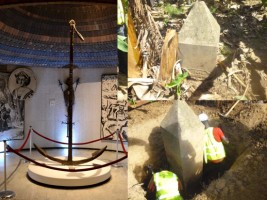
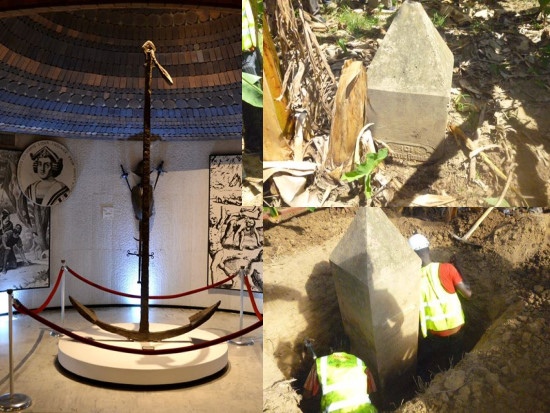
Haiti - Heritage : The anchor of Santa Maria, historical heritage of Haiti
The 3 archaeologists naval experts sent by the Spanish government https://www.haitilibre.com/en/news-12120-haiti-culture-according-to-spanish-experts-the-remains-of-the-santa-maria-would-be-buried-underground.html went last week in Caracol, to proceed with the excavation of the monolith marking the location where was found in the late eighteenth century, the anchor of the Santa Maria, the caravel of the Admiral Christopher Columbus, aground Dec. 24, 1492 off the Caracol Bay. It was found near the end of the eighteenth century, 1796, on the habitation Fournier-Bellevue to 900 toises [± 1,000m) of the sea and 1.20m deep in the soil. This is the most valuable witness object, of the historical event marking the arrival of the Spaniards in America, in the late fifteenth century when Christopher Columbus took possession of "Ayiti" in the name of the Catholic Kings of Spain, a colonization that caused the almost complete disappearance of the aborigines of the island.
The anchor of Santa Maria that is in the Musée du Panthéon National Haïtien (MUPANAH), belongs to the Haiti historic cultural heritage. It is part of the permanent collection, illustrating the Colombian or Spanish period. Its enhancement is performed with engravings showing scenes from the arrival of the Spaniards and the massacre of the indigenous. There are also a few European military items [sixteenth - seventeenth century] such as: front armor, infantry helmet, dagger parade, Spanish sword and sword of infantry. The historical value of this anchor, continue to arouse curiosity of thousands of visitors who visited the MUPANAH since its inauguration in Port-au-Prince, April 7, 1983. See also : HL/ HaitiLibre
|
|









|
|
Why HaitiLibre ? |
Contact us |
Français
Copyright © 2010 - 2026 Haitilibre.com |