
|
|
||||||||||||||||||


| 2026-2027 Electoral Calendar, latest official version |

|
 |
|
|
|
|
|
|
|||||
|
|
According to the World Bank, Haiti retains real assets for building a sustainable recovery (report) 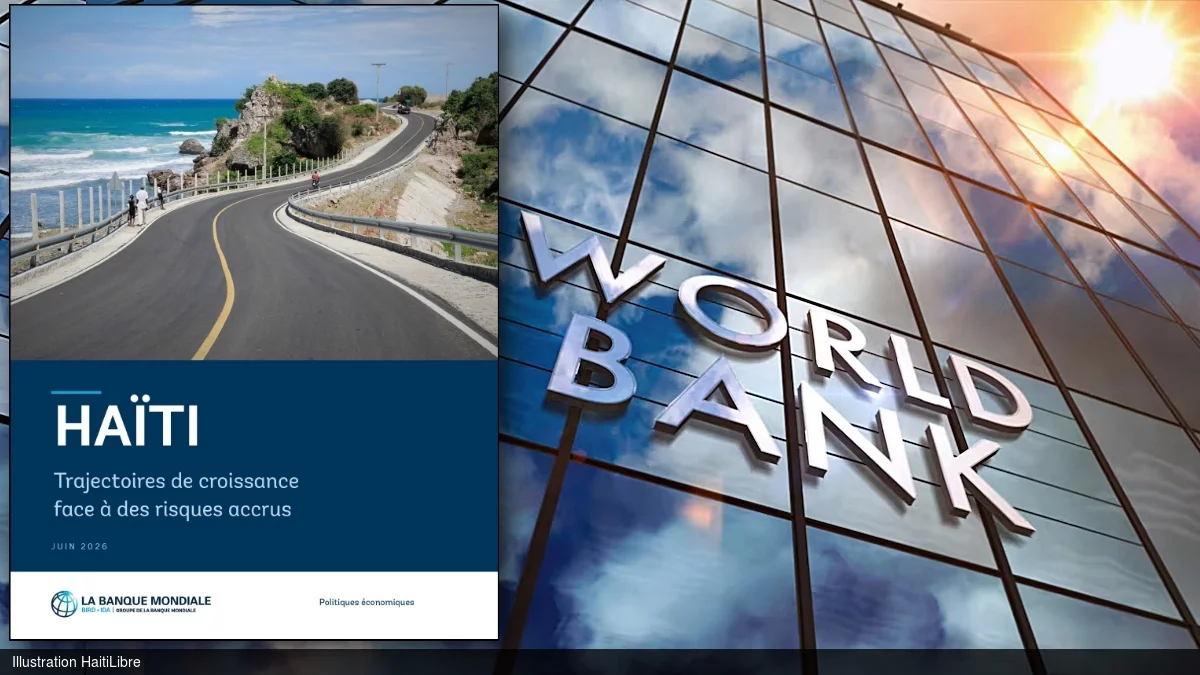
On Monday, September 14, 2026, the World Bank released a report on Haiti’s economic situation titled "Haiti: Growth Trajectory Amidst Heightened Risks" providing an in-depth assessment of the country’s performance and outlook. While recent economic results remain concerning—marked by seven consecutive years of negative economic growth (up to 2025)—the report highlights that Haiti possesses genuine assets upon which a sustainable recovery can be built, provided that structural challenges are resolutely addressed. Haiti’s economic performance has been disappointing over the past two decades. Between 2010 and 2025, real GDP per capita fell by approximately 17%. In 2023, GDP per capita stood at $3,281 in purchasing power parity (PPP) terms—barely 15% of the regional average for Latin America and the Caribbean and the lowest level in the region. Poverty, already high, continues to rise. The report estimates that 49.0% of Haitians lived below the international poverty line of $3.00 per day in 2025, up from 44.6% in 2023, with the rate projected to continue rising through 2026 (in PPP terms). However, this underperformance should not overshadow the country’s substantial potential. Among its assets, the report highlights Haiti’s young, growing, and competitive workforce, as well as its advantageous geographic location near major markets. The diaspora represents a major economic force. Indeed, remittances reached a record high of $4.4 billion in fiscal year 2025, representing the country’s primary source of foreign currency. Furthermore, the agricultural sector holds significant potential in high-value-added export crops such as cocoa, vetiver, mangoes, and coffee. However, the report reveals that this sector—which employs nearly half of the workforce—receives less than 1% of formal credit. "While security is a prerequisite for economic recovery, Haiti must simultaneously implement policies to address emerging challenges: job creation, migration, the volatility of remittance flows, and improved market access for its exports," said Anne-Lucie Lefebvre, World Bank Country Manager for Haiti. "The World Bank stands ready to support Haiti in mobilizing additional resources to drive economic growth and in deepening international partnerships by implementing reforms aimed at strengthening institutions." To achieve this, the report identifies four major economic challenges that Haiti must address with concrete measures as part of its recovery plan. First is job creation for growth and security. A lack of economic opportunities, particularly for young people, has fueled insecurity. Conflict has displaced nearly 1.5 million people within the country, disrupting logistics, driving inflation, and limiting the delivery of essential services. Without a structural response to the employment issue, the Haitian economy risks long-term fragmentation between areas under control and territories cut off from growth. Next is managing the return of internally displaced persons, who are estimated to make up about 12% of the country's population. Added to this are massive waves of expulsions from the Dominican Republic—exceeding 25,000 people in May 2026—as well as uncertainty regarding the fate of approximately 350,000 Haitians holding Temporary Protected Status (TPS) in the United States. These migration dynamics threaten to overwhelm service delivery systems. However, improved management of these flows could turn this challenge into an opportunity by harnessing the skills of returnees to drive economic recovery. Thirdly, the country must address the instability of remittance flows. With 79% of remittances originating in the United States during the 2025 fiscal year, Haiti is highly vulnerable to shifts in U.S. policy. A 1% excise tax on cash-funded transfers took effect in January 2026. Any decline in outward migration, combined with an increase in returns, could place significant pressure on foreign currency inflows and further weaken the economy. Finally, the country must renew and expand its access to commercial markets. The HOPE/HELP legislation, which granted Haiti’s textile sector duty-free access to the U.S. market, expired on September 30, 2025. After four months of full tariffs being applied, a retroactive extension was adopted in February 2026, but it, too, expires on December 31, 2026. Securing longer-term preferential access, while identifying new trade opportunities, is essential to maintaining the remaining industrial base of the textile and apparel sector https://www.haitilibre.com/en/news-48381-haiti-usa-adih-welcomes-the-extension-of-the-hope-help-act.html [HOPE/HELP was renewed for 2 years] "To resume a growth trajectory despite the heightened risks characterizing the current economic climate, Haiti must implement macro-fiscal and governance reforms that will yield results regardless of the security scenario; a costed investment program for the Northern and Southern corridors that can be implemented immediately; and, finally, ensure the reconnection of the capital, which represents the most difficult challenge and the greatest constraint in the short term," said Bernard James Haven, Senior Economist for the World Bank in Haiti. Download the World Bank report (PDF in French, 58 pages): https://www.haitilibre.com/docs/Haiti---Trajectoires-de-croissance-face-a-des-risques-accrus.pdf HL/ HaitiLibre
|
|









|
|
Why HaitiLibre ? |
Contact us |
Français
Copyright © 2010 - 2026 Haitilibre.com |