
|
|
||||||||||||||||||


| 2026-2027 Electoral Calendar, latest official version |

|
 |
|
|
|
|
|
|
|||||
|
|
Haiti - Agriculture : Donation of post-harvest equipment to reduce losses and improve incomes 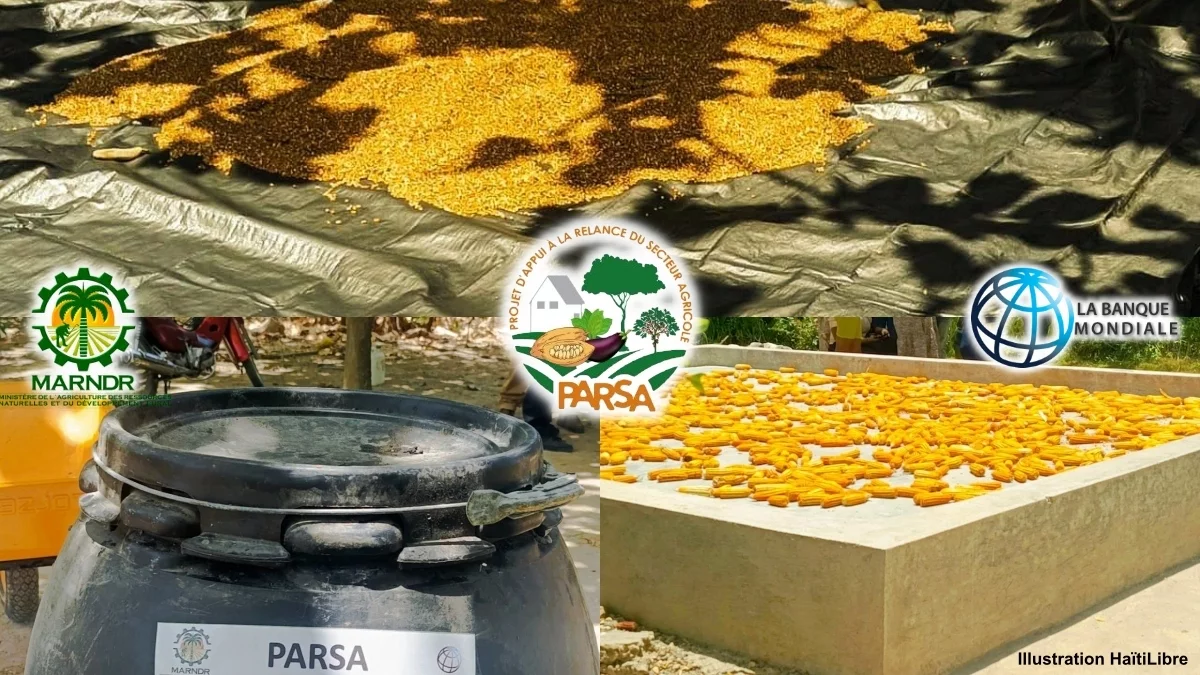
As part of the implementation of the Resilient Agriculture for Food Security Project (PARSA), the Ministry of Agriculture, Natural Resources and Rural Development (MARNDR) is continuing to strengthen producers' post-harvest management capacities. With financial support from the World Bank, the Ministry is progressively deploying drying infrastructure, storage equipment, and small agricultural tools designed to reduce post-harvest losses, improve the quality of produce, and increase the incomes of rural households. A monitoring mission was conducted in the municipality of Port-Salut to assess the use of the equipment provided to beneficiaries and evaluate its impact on production and processing activities. To date, an initial batch of 150 drying sheds has been built in four municipalities in the South Department: 57 in Cavaillon, 60 in Saint-Louis-du-Sud, 25 in Port-Salut, and 15 in Saint-Jean-du-Sud. Each measuring 20 m², these drying areas are set up directly in the beneficiaries' yards to facilitate crop drying, improve the storage conditions of agricultural products, and help reduce post-harvest losses. These drying areas allow farmers to efficiently dry maize, beans, sorghum, cocoa, coffee, and other crops. In a spirit of community solidarity, each beneficiary is encouraged to make their drying area available to other farmers in their community when they request it. Before the implementation of this component of the PARSA program, many farmers in the South Department experienced significant agricultural losses due to a lack of suitable infrastructure for drying, storing, and preserving crops. This situation reduced the quality of their produce, limited its market value, and directly impacted the income of family farms. In addition to the drying slopes, the Ministry is continuing to strengthen the capacities of producers by providing equipment tailored to the needs of farms. Beneficiaries who opted for silos received two storage units, while those who chose small agricultural equipment received two drums, four tarpaulins and a wheelbarrow. This equipment improves the drying, storage, and preservation of crops, while significantly reducing post-harvest losses that regularly affected agricultural production. Through the construction of drying slopes and the provision of silos and small equipment to producers—tarpaulins, wheelbarrows, drums, and other agricultural tools—the Ministry of Agriculture, Natural Resources and Rural Development (MARNDR), with funding from the World Bank under the PARSA program, is providing a concrete response to the challenges of post-harvest losses in the South Department. These investments sustainably improve the storage conditions of agricultural products, boost the incomes of rural households, and contribute to the modernization of farms. By combining infrastructure, equipment, and technical support, the Ministry of Agriculture, Natural Resources and Rural Development (MARNDR) reaffirms its commitment to building a more productive, resilient, and better-prepared Haitian agriculture sector, better equipped to meet the challenges of food security. HL/ HaitiLibre
|
|









|
|
Why HaitiLibre ? |
Contact us |
Français
Copyright © 2010 - 2026 Haitilibre.com |