
|
|
||||||||||||||||||


| New revised electoral calendar (Oct. 28, 2026) |

|
 |
|
|
|
|
|
|
|||||
|
|
Haiti - Agriculture : Agronomists and veterinarians trained in artificial insemination 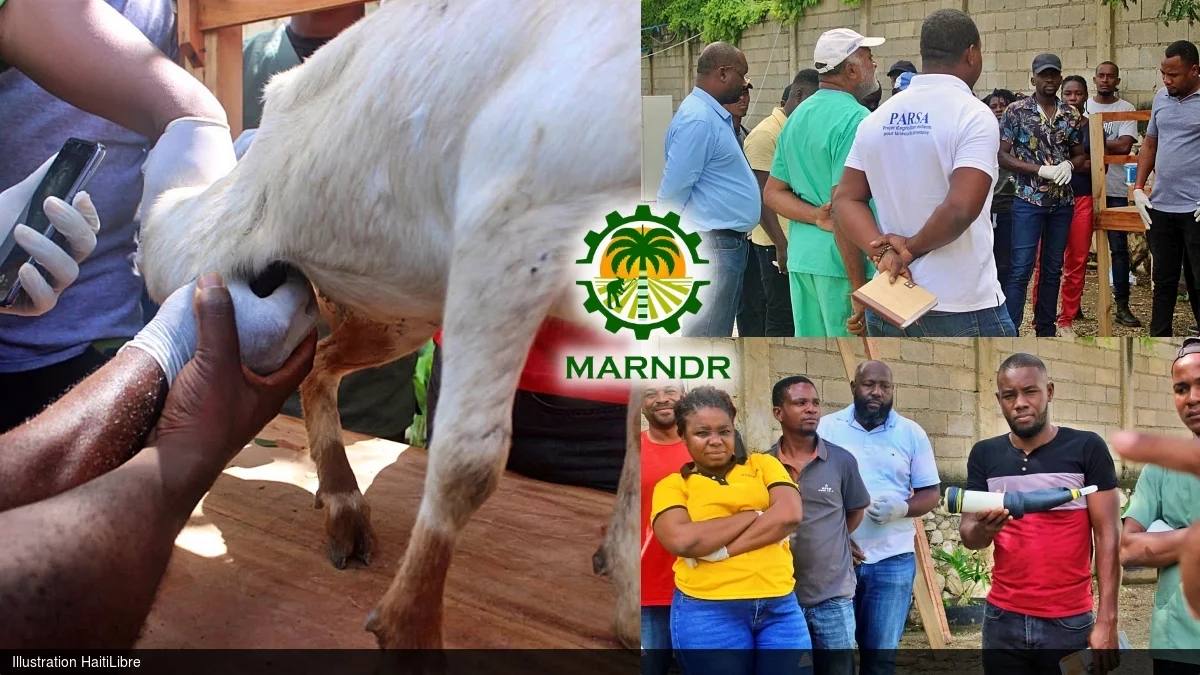
Under the aegis of the Ministry of Agriculture, 21 agronomists and veterinary agents completed three weeks of theoretical and practical training in October 2026 on artificial insemination, a technology that holds great potential for improving animal reproduction. This training strengthened the expertise of these professionals and paved the way for new approaches to animal reproduction. The initiative was organized as part of the Resilient Agriculture for Food Security Project (PARSA) specifically its animal production component and was implemented by a consortium consisting of the Inter-American Institute for Cooperation on Agriculture (IICA) and the Haitian NGO, GIRADEL. From October 12 to 30, 2026, the commune of Fonds-des-Blancs became a hub for learning, exchange, and the sharing of experiences regarding artificial insemination. Over the three-week period, 21 participants—including agronomy students from various universities across the country, veterinary agents from the departmental agricultural directorates involved in PARSA, and IICA supervisors—received theoretical and practical instruction in this animal reproduction technique. The training session was led by two specialists in the field: agronomist Michelet Mascary, the consortium coordinator, and Ronelson Stinfil, an expert in small ruminant husbandry. Through their instruction, they enabled participants to gain a deeper understanding of the fundamental principles of artificial insemination, expand their knowledge, and become familiar with a technology capable of enhancing herd reproductive performance, thereby opening new possibilities for the development of livestock farming in Haiti. The program included simulation exercises and technical demonstrations, during which participants, equipped with the necessary gear and supervised by experienced trainers—practiced the various stages of artificial insemination on several goats. These hands, on exercises helped the participants internalize the techniques taught and strengthened their proficiency in artificial insemination. Ronelson Stinfil highlighted the theoretical and practical knowledge imparted to the participants. He explained that they were introduced to every stage of the process, including animal assessment, estrus synchronization, insemination techniques, and health monitoring. Furthermore, the professionals tasked with replicating this training learned how to interpret ultrasound scans, identify the substances used for synchronization, and handle the equipment required for the procedures. Stinfil noted that, following this training, the participants now possess the practical knowledge and skills to handle the equipment and have gained a stronger command of the various steps involved in the technique. Above all, this training served as a forum for exchanging experiences and building capacity; it was designed both to prepare professionals to carry out artificial insemination for livestock farmers and to equip them to raise awareness among those farmers about the technology’s benefits, specifically regarding the improvement of their herds' genetic potential. The training appears to have fully met the participants' expectations. With two days left to go, many highlighted the high quality of the instruction and the valuable skills they had acquired. Beyond expressions of satisfaction, a common sentiment emerged from the participants: they are leaving better equipped, more confident, and well-prepared to put their new skills to work for the benefit of livestock farmers. These achievements align directly with the operational objectives of the PARSA project, which aims to promote artificial insemination in the targeted departments, with a goal of carrying out 50 inseminations in each of the project’s intervention areas. Learn more : Artificial insemination is an animal reproduction technique that involves introducing semen into a female’s reproductive tract without natural mating. For the Haitian livestock sector, the development of this technology offers a promising avenue for strengthening breeding practices, gradually improving the genetic quality of animals, and supporting farm productivity. However, the results depend on several factors, including the availability of equipment, the quality of health monitoring, the technical proficiency of those performing the procedures, and the support provided to livestock farmers. HL/ HaitiLibre
|
|









|
|
Why HaitiLibre ? |
Contact us |
Français
Copyright © 2010 - 2026 Haitilibre.com |