
|
|
||||||||||||||||||


| 2026-2027 Electoral Calendar, latest official version |

|
 |
|
|
|
|
|
|
|||||
|
|
Haiti - Bangkok : Address by the Governor of the BRH at the Caribbean Ministerial Meeting 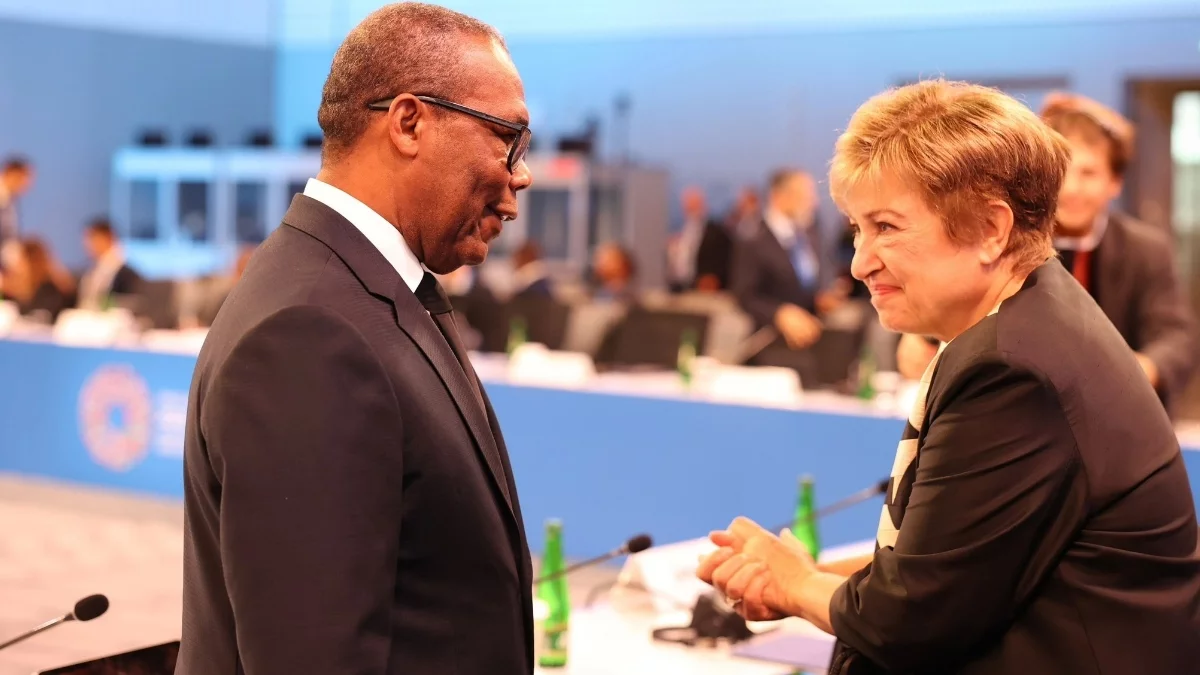
On October 15, 2026, at a Caribbean ministerial meeting held in Bangkok, Thailand, Gabriel Ronald, Governor of the Bank of the Republic of Haiti (BRH), emphasized to Kristalina Georgieva, Managing Director of the International Monetary Fund (IMF), that "economic adjustment must preserve social spending and the investments necessary to cope with shocks." He also stressed the importance of strengthening skills and creating employment opportunities to enable young people to build their future in Haiti. Statement by the Governor of the BRH : "I would like to thank the IMF for this meeting, which focuses on two pressing challenges in our region: the succession of global shocks and demographic shifts. In island states and fragile countries, each new shock can have disproportionate effects, further narrowing already limited room for maneuver. In the Caribbean, current shocks—particularly those related to energy, exacerbate structural imbalances. Furthermore, the damage caused by natural disasters, when measured as a percentage of GDP, is six times higher than in other regions. For our central banks, the challenge lies in maintaining macroeconomic and financial stability while ensuring that overly abrupt adjustments do not further weaken the economy. However, in Haiti, stability alone is not enough when approximately half the population faces acute food insecurity. Given the needs of the population, macroeconomic balance should not be achieved at the expense of social spending and the investments essential for resilience. Access to concessional financing, shock-responsive instruments, and well-sequenced technical assistance therefore remains vital. Demographic trends only heighten this urgency.” More than half of the Haitian population is under the age of 25. For Haiti, the challenge therefore lies not in an aging population or a declining birth rate, but in the emigration of a significant number of young people and skilled workers: according to a study by an international institution, more than eight out of every ten Haitian university graduates are now living abroad. This dynamic diminishes our growth potential and weakens the human capital that our institutions so urgently need to carry out reforms. Our priority should be to create conditions that allow our young people to build their futures within their own country. This requires greater investment in capacity building and economic opportunities, as well as a more strategic engagement with our diaspora. Regional cooperation can be of assistance, particularly in areas such as energy security, training, the mobility of skilled labor, and disaster preparedness, though it must also account for the varying levels of vulnerability and capacity among our respective economies. Madam General Director, we recognize that while resilience comes at a cost, the cost of inaction would be far higher. We therefore encourage the IMF to continue its efforts to tailor its technical assistance and financial instruments to the realities faced by the most vulnerable nations, ensuring that the preservation of stability can go hand in hand with investment in resilience and the future. Thank you." HL/ HaïtiLibre
|
|









|
|
Why HaitiLibre ? |
Contact us |
Français
Copyright © 2010 - 2026 Haitilibre.com |