
|
|
||||||||||||||||||


| 2026-2027 Electoral Calendar, latest official version |

|
 |
|
|
|
|
|
|
|||||
|
|
Haiti - FLASH : The real reasons for the GSF deployment delay 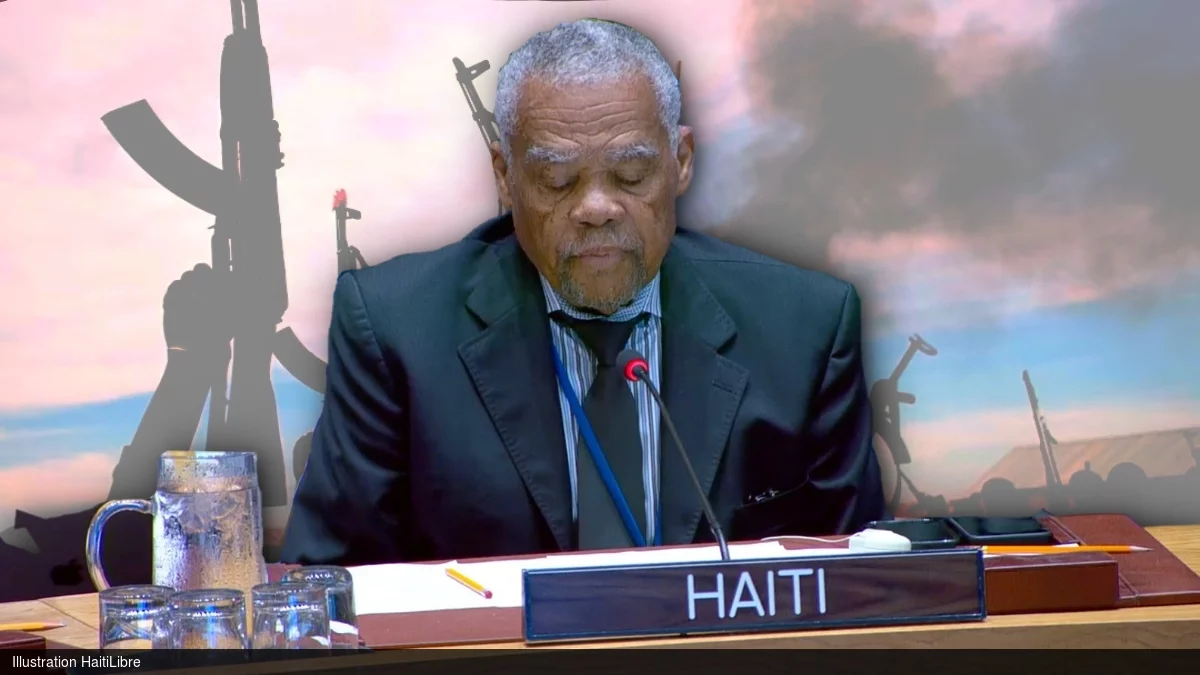
On Friday, August 28, at the Security Council, following the terrorist attack in Kenscoff, a consensus emerged on the urgent need to accelerate the deployment of the Gang Supression Force (GSF). Pierre Ericq Pierre, Haiti's Ambassador to the UN, stressed the "imperative need" for the international community to expedite the GSF's deployment to reach its planned strength of 5,500 members as soon as possible and to provide it with the necessary resources to fulfill its mission. He mentioned that Ivory Coast, Mongolia, and Chad have already signed agreements with Haiti to join the FRG. Steps are underway to sign agreements with Bangladesh, Guatemala, Jamaica, and Sri Lanka in the coming days. But not a word about the real reasons for the delays… The real reasons for the delay : The massive deployment of international reinforcements for the GSF in Haiti is experiencing significant delays due to a complex logistical transition, chronic funding problems, and major political obstacles. Although the FRG was officially approved by the UN Security Council to replace the previous mission, its arrival on the ground is happening in dribs and drabs. This delay can be explained by four specific factors : • The previous force, the Kenyan-led Multinational Security Support Mission (MMAS), was widely considered inadequate and a failure by the population. To rectify this, the UN authorized the creation of the FRG with a much more offensive mandate and an ambitious ceiling of 5,500 soldiers and police officers. Completely restructuring the chain of command and coordinating new international contingents is taking much longer than anticipated. • Contrary to the massive deployment hoped for by Haitian authorities and the population, the approved deployment plan calls for a phased build-up. The number of troops on the ground is increasing very slowly. Full deployment and achieving the force's full operational capability are hampered by the preparation times of contributing countries. • The GSF is not a traditional peacekeeping operation directly funded by the UN's mandatory budget. It relies largely on voluntary financial contributions from member states. Even though the new UN Support Office in Haiti (BANUH) has been established to structure logistics, there is still insufficient funding to adequately equip troops to face heavily armed gangs. • Funding for the GSF was never fully guaranteed for its first year, and the UN does not provide weapons or combat equipment. It is precisely this technical nuance that explains the gap between political promises and the reality on the ground. It is true that over $200 million was pledged by member states when the FRG was established under the auspices of the UN. To operate a force of 5,500 troops, the estimated annual budget is between $600 and $800 million. Of the pledged funds, only a fraction (approximately $59 million) has actually been disbursed to the UN trust fund. The available funds proved insufficient to cover the entire first year. The GSF is not a traditional peacekeeping mission financed by mandatory UN contributions. According to the force's rules, countries must deploy their troops with their own military equipment, and the UN then reimburses them through the voluntary fund. Volunteer countries (such as Chad or El Salvador) must provide heavy equipment that they don't always have in reserve. This is why the United States regularly has to issue waivers or send equipment directly to the contributing armies before they can fly to Port-au-Prince. On the ground, the contingents of the GSF, the Haitian police, and the Armed Forces of Haiti (FAd'H) are facing heavily armed gang coalitions, Viv Ansanm, which possess 5.56 mm and 7.62 mm caliber automatic weapons (AK-47, AR-15, Galil rifles). Four specific categories of military equipment are sorely lacking for conducting urban offensive operations: 1. Attack and tactical transport helicopters: Combat helicopters to support ground troops in densely populated areas of Port-au-Prince and transport helicopters to rapidly deploy reinforcements out of the capital (into the Artibonite region). The limited capacity available, supplied primarily by El Salvador, is mainly reserved for emergency medical evacuations (MEDEVAC) due to the closure of local hospitals. 2. Light armored vehicles adapted for urban combat : The forces on the ground have received several batches of MRAP-type armored vehicles (supplied by the United States). However, their configuration is not suited to the realities of the terrain. These vehicles are bulky and heavy. They prove incapable of maneuvering or navigating the extremely narrow and winding alleyways of the slums (such as Cité Soleil or Bas-Delmas) where the gangs are entrenched. 3. Tactical surveillance and urban reconnaissance drones : The fight against gangs requires continuous, real-time intelligence gathering to avoid traps and fortified barricades. Regular ground troops lack technological tools directly integrated into their combat units to anticipate gang movements. 4. Heavy weaponry and armor-piercing munitions : The Haitian National Police (PNH) and the first international soldiers are often outmatched in terms of raw firepower. A lack of long-range sniper rifles (to neutralize gang snipers), heavy machine guns mounted on gun carriages to hold checkpoints, and, above all, a massive stockpile of ammunition. Due to logistical restrictions and delivery delays of lethal equipment from donor countries, the force suffers from a chronic shortage of ammunition needed to support prolonged, large-scale assaults. Security chaos and the elections: The delay in the deployment of the international force (FRG) has a direct and destabilizing impact on the electoral calendar, forcing a postponement of key dates toward late 2026 or early 2027. Despite the publication of these new end-of-year dates, Haitian electoral experts and ministers are raising the alarm. If the international force fails to secure roads and polling stations in the coming weeks, candidate registration and the election campaign (scheduled to begin in October) will take place in a climate of terror, making the current timetable even more precarious. SL/ HaitiLibre
|
|







|
|
Why HaitiLibre ? |
Contact us |
Français
Copyright © 2010 - 2026 Haitilibre.com |