
|
|
||||||||||||||||||


| 2026-2027 Electoral Calendar, latest official version |

|
 |
|
|
|
|
|
|
|||||||
|
|
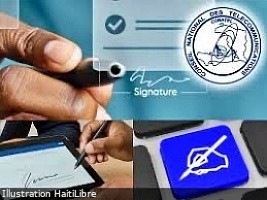
Everything you need to know about the different levels of electronic signatures in Haiti
The National Telecommunications Council (CONATEL) informs the public, public institutions, businesses, and digital stakeholders that electronic signatures are legally recognized in Haiti in accordance with the Law of February 14, 2017, as amended by the Decree of August 20, 2025, and the Order of September 18, 2025, which sets out the procedures for its implementation. Haitian legislation recognizes several levels of electronic signatures, including Simple Electronic Signatures (SES), Advanced Electronic Signatures (SEA), and Qualified Electronic Signatures (SEQ). In accordance with the law, Simple Electronic Signatures have legal value and can be admitted as evidence within the limits defined by the applicable legal framework. In Haiti, the use of electronic signatures is governed by the decree on electronic signatures (as amended) and its implementing order, under the supervision of CONATEL. These texts define three levels of signature, distinguished by their level of security, identification, and legal value : Simple Electronic Signature (SES) : This is the most basic level (for example, checking a box, scanning a handwritten signature, or clicking an "Accept" button). The level of security is low and does not absolutely guarantee the identity of the person who signed or the long-term integrity of the document. Its use is recommended for everyday transactions with low legal or financial implications (e.g., simple acknowledgments of receipt, acceptance of terms and conditions, validation of internal memos). Advanced Electronic Signature (EAS) : The EAS offers a higher level of security that requires an electronic certificate. It is uniquely linked to the signatory and allows for their certain identification. It uses cryptographic processes that detect any subsequent modification of the document. Its level of security is high and guarantees the integrity of the document and the identity of the author. Its use is recommended for contracts and professional or commercial documents (e.g., employment contracts, confidentiality agreements, binding quotes). Qualified Electronic Signature (QES) : The QES is the most robust and secure level. It is created using a secure device and relies on a qualified certificate issued by an accredited Trust Service Provider. It requires rigorous identity verification (in person or via a validated video process). Its security level is maximum. Under Haitian law, it offers the highest legal value and is strictly equivalent to a handwritten signature. In the event of a dispute, it is the only one that offers indisputable probative force. Its use is recommended for documents with very high legal and financial risk (e.g., notarial deeds, bank loan agreements, official government documents, public contracts). SL/ HaitiLibre
|
|






|
|
Why HaitiLibre ? |
Contact us |
Français
Copyright © 2010 - 2026 Haitilibre.com |