
|
|
||||||||||||||||||


| 2026-2027 Electoral Calendar, latest official version |

|
 |
|
|
|
|
|
|
|||||||
|
|
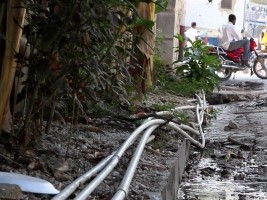
Haiti - Politic : Access to drinking water and sanitation far from reality in the country
A new study published by the World Bank, underlines the urgency of better targeting investments in the water and sanitation sector in Haiti to better serve the entire population and fight against poverty. The new report "Looking Beyond Government-Led Delivery of Water Supply and Sanitation Services : The Market Choices and Practices of Haiti’s Most Vulnerable People", demonstrates a direct link between lack of access to water and sanitation and the health of the population, including a detrimental effect on child growth. This study reveals that between 1990 and 2015 there was a 4% decrease in the population with access to improved water sources (from 62% to 58%), and that half of the poor population remains deprived of access to health facilities while 30% depend on unimproved facilities. "Access to drinking water and sanitation is a direct investment in human capital. Efforts to improve access to water, sanitation and hygiene services have a positive impact on people's resilience, particularly in terms of health," said Anabela Abreu, Director of the World Bank's office in Haiti. Nearly 25% of Haitians use private-sector services for drinking water, a percentage that is even higher in the Port-au-Prince metropolitan area, at 57%. For example, water expenditures in Port-au-Prince represent 15% of annual expenditures per household. In addition, a national inventory of drinking water infrastructure carried out in 2017 shows the wide disparity of access to drinking water across the country between departments, with water access between 28% in Grande-Anse and 52% in the South and Center. This is even more marked between the communal sections. In the Artibonite access rates vary from 7% to 74%, and in Grande Anse from 0% to 55%. To achieve the goal of sustainable development of ensuring access to drinking water and sanitation for all, the National Directorate of Drinking Water and Sanitation (DINEPA) with the support of the World Bank started in 2015, an approach called "Budget Program by Objectives", which includes, among other things, allowing the institution to have a database on the general situation of the country in order to design a national program. This program should enable DINEPA to guarantee by 2030, 100% basic access to drinking water, 80% access to improved basic sanitation and 20% to individual sanitation for Haitians. To achieve this, an annual investment of $124 million is required. These studies conducted in collaboration with financial and technical partners including the Inter-American Development Bank, the Spanish Agency for International Development Cooperation (AECID), Unicef and Swiss cooperation must guide strategic interventions to ensure universal acces and fair to drinking water and sanitation in the country. These analyzes offer several options to better spend to provide better water and sanitation coverage for the poorest :
See also : https://www.haitilibre.com/en/news-26782-haiti-health-nearly-30-of-haitians-defecate-outdoors.html HL/ HaitiLibre
|
|







|
|
Why HaitiLibre ? |
Contact us |
Français
Copyright © 2010 - 2026 Haitilibre.com |