
|
|
||||||||||||||||||


| 2026-2027 Electoral Calendar, latest official version |

|
 |
|
|
|
|
|
|
|||||
|
|
Haiti - Politics : National Program for Economic, Social, and Territorial Stabilization and Recovery 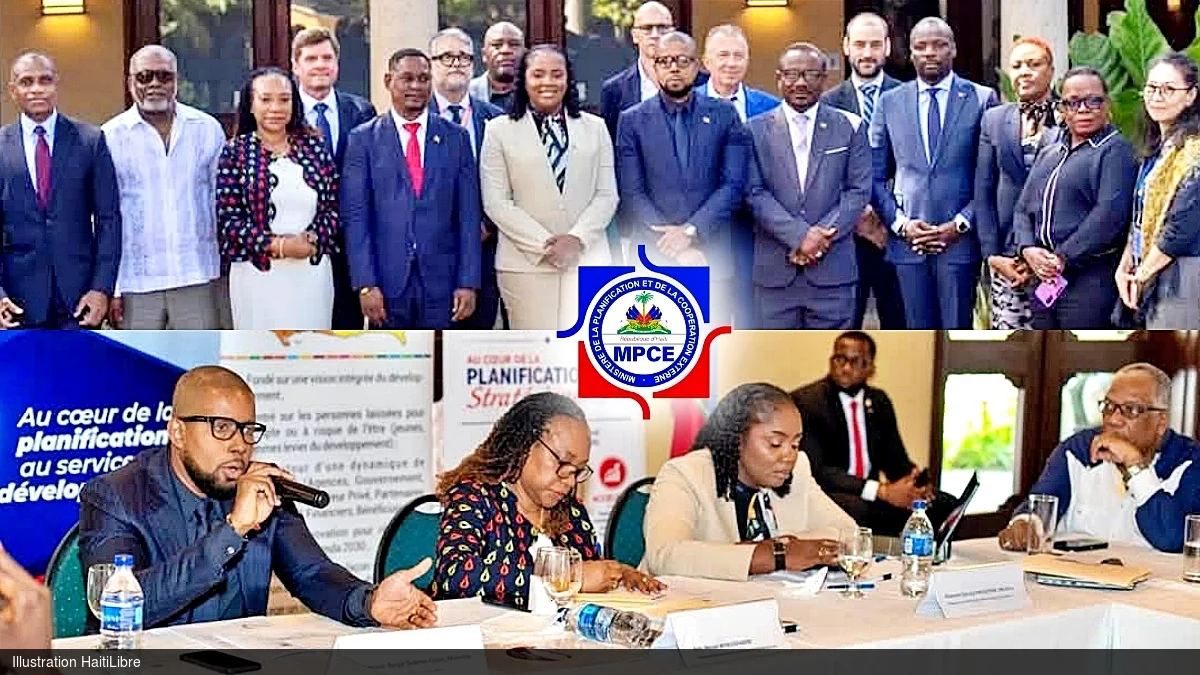
On Monday, September 28, 2026, the Ministry of Planning and External Cooperation (MPCE) organized a workshop to review and validate the strategic directions of the National Program for Stabilization and Economic, Social, and Territorial Recovery (PNSREST) 2026–2030. The PNSREST aims to restore the presence and capacity of public institutions in crisis-affected areas, re-establish access to essential services, and create economic opportunities—including in areas impacted by population displacement. Target groups notably include women and youth, with the goal of rapidly delivering concrete, visible results for the population. Bringing together representatives from the Government, the United Nations, and international financial institutions, the workshop sought to review the strategic document and gather input from various stakeholders before proceeding with the program's finalization. The program is structured around eight interconnected strategic pillars : 1. Governance, security, and territorial administration; 2. Economic recovery and livelihoods; 3. Basic social services; 4. Essential infrastructure; 5. Environment and risk management; 6. Community security and sustainable return; 7. Gender, protection, and inclusion; 8. Steering, analysis, and coordination. The PNSREST also emphasizes initiatives that foster inclusive growth, create decent jobs, and reduce community vulnerabilities. "The Government’s ambition is clear: to shift from an ad-hoc response approach to a structured, coordinated, and sustainable strategy that lays the groundwork for the country’s recovery starting today. The Program aims to create conditions in host areas—particularly outside the metropolitan region—that will enable those who wish to do so to remain there long-term : services, jobs, and security. And we will do this in partnership with local authorities, who are on the front lines. The PNSREST represents our collective commitment to restoring hope where it has vanished, re-establishing the State’s presence where it has faded, and offering every Haitian—wherever they live—the prospect of a dignified and secure life," stated Sandra Paulemon, Minister of Planning, who chaired the workshop. Funding is also a central point in the observations made by Marc-Elie Nelson, Minister of Social Affairs. The proposed framework outlines a total budget of US$250 million, with a State contribution estimated at approximately 10%. The Minister believes it is necessary to clarify the breakdown of this contribution and precisely identify the various funding sources, in collaboration with the Ministry of Economy and Finance and other relevant ministries. Furthermore, Mr. Nelson requests a clear distinction between estimated costs, allocations proposed under the Public Investment Program, secured funding, and resources yet to be mobilized. In the Minister's view, this clarification is essential to ensuring the financial coherence of the PNSREST and preventing the risk of double counting. "For the United Nations, this program calls for a collective commitment: strengthening the alignment of our interventions with national priorities, better coordinating our agencies' contributions, and jointly reporting on the results achieved. In my capacity as Resident Coordinator, I call for increased resource mobilization, in close collaboration with the Government and all partners," explained Nicole Boni Kouassi, UN Resident and Humanitarian Coordinator in Haiti. Following the validation of strategic directions by sectoral ministers, the next steps will involve technical work to refine program definitions under the various pillars, as well as the development of concrete projects with visible impact for the population. The mobilization of the MPCE, the UN system, international financial institutions, and all technical and financial partners around this strategic framework will contribute to the stabilization and sustainable recovery of communities affected by the crisis. Participants in this workshop included : Ministers Serge Gabriel Colin (Economy), James Monazard (Commerce), Pedrica Saint-Jean (Women's Affairs), Marcelin Aubourg (Agriculture), and Marc-Elie Nelson (Social Affairs); the United Nations Resident and Humanitarian Coordinator, Ms. Nicole Boni Kouassi; the World Bank’s Operations Manager for Haiti (Latin America and Caribbean Region), Ms. Anne-Lucie Lefebvre; the Inter-American Development Bank (IDB) Group Representative, Ms. Corinne Cathala; as well as representatives from several United Nations system entities. HL/ S/ HaitiLibre
|
|









|
|
Why HaitiLibre ? |
Contact us |
Français
Copyright © 2010 - 2026 Haitilibre.com |