
|
|
||||||||||||||||||


| 2026-2027 Electoral Calendar, latest official version |

|
 |
|
|
|
|
|
|
|||||||
|
|
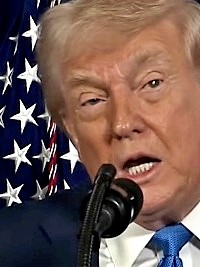
Haiti - FLASH : Trump justifies the operation against Venezuela with a doctrine more than 200 years old
Geopolitical news is marked by a historic turning point following the military operation in Caracas and the arrest of Nicolas Maduro. On Saturday January 3rd, during a press conference in Mar-a-Lago, Florida, Donald Trump resurrected the Monroe Doctrine, more than two centuries old (1823). This doctrine states that Latin America and more generally the Americas are the exclusive sphere of influence of the United States. Trump invoked this doctrine to justify American foreign policy and the temporary takeover of Venezuela by American forces. Historical origins of the doctrine from James Monroe to Theodore Roosevelt : This doctrine was established in 1823 by the fifth American President, James Monroe. The United States had been independent for less than 50 years and the world was changing rapidly, with most Latin American countries having won their independence from European colonial powers. The Monroe Doctrine therefore first of all establishes a distinction between the Old World and the New World. The United States undertakes not to intervene in the internal and military affairs of European countries, nor with their colony. In return, Washington declared that the Americas were no longer open to colonization and that any European attempt at interference in one of these countries would be perceived as a hostile act towards the United States. In 1904, President Theodore Roosevelt reinforced this vision by introducing his famous corollary "Policeman of the Americas", thus granting himself the right to intervene militarily in Latin American countries in the event of "failure" on their part. This text established the United States as a regional police force, justifying the annexation of Puerto Rico in 1898 and the anti-communist struggles during the Cold War. Donald Trump's strategy: Nationalism and natural resources : Today, the Trump administration is modernizing this vision through a new "National Security Strategy". This document, more nationalist, is based on three pillars : • Control of resources : Priority access to strategic deposits (notably Venezuelan oil). • Fight against immigration : Forced stabilization of governments to limit migratory flows towards the North. • Eviction of global rivals : Block the influence of China and Russia in the Western Hemisphere. Today Donald Trump is reappropriating this doctrine and does not hesitate to add his own obsessions. During his conference he notably referred to another document, published almost a month ago by his administration and which redefines the "National Security Strategy" of the United States, openly nationalist. Regarding Latin America, this document states in particular that the United States must seek access to resources and strategic locations and ensure that governments in the region are "sufficiently stable and well governed to prevent and discourage mass migration to the United States." The United States "will deny non-hemispheric competitors the opportunity to position forces or other threatening capabilities, or to possess or control strategic assets" in the region, according to the document, referring between the lines to China, the main buyer of Venezuelan oil. But Trump's ambition does not stop in Venezuela. Between attempts to annex Greenland, Canada or the resumption of control of the Panama Canal, Donald Trump is drawing a map of the world where American sovereignty no longer knows traditional geographical borders. SL/ HaitiLibre
|
|









|
|
Why HaitiLibre ? |
Contact us |
Français
Copyright © 2010 - 2026 Haitilibre.com |