
|
|
||||||||||||||||||


| 2026-2027 Electoral Calendar, latest official version |

|
 |
|
|
|
|
|
|
|||||||
|
|
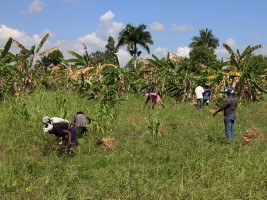
Haiti - Agriculture : The bean harvest could be reduced due to a water deficit
In the latest 2020 update of its bulletin, the International Organization Famine Early Warning Systems Network (FEWS NET) indicates that livelihoods remain disrupted in Haiti due to the high price of food products basic, lack of job opportunity and residual effects of the socio-political crisis. FEWS NET stresses that "poor households will continue to intensify the sale of charcoal and animals, delay the return of children to class, consume early crops, etc... to maintain their basic food consumption. Food insecurity in Crisis (IPC Phase 3, Food Crisis and Acute Livelihoods) and in Stress (IPC Phase 2, Moderate / Limited Food Insecurity) continues." In Haiti, the bean is currently in early flowering or about to be harvested depending on the region. Its yield could be reduced in the North and North-East due to a water deficit observed since the end of December and in the Artibonite because of strong winds. Other winter crops such as corn and Congo peas, as well as bananas, roots and tubers are being harvested or are in the process of being harvested in other regions. Markets now operate "normally" across the country, allowing producers to sell their produce and traders to operate except in the Croix-des-Bossales market. The rest of the economy is gradually recovering from the tensions of the crisis, but household food security remains fragile in the face of the possibility of a resumption of socio-political disturbances. Learn more about the Integrated Food Security Phase Classification (IPC) : Phase 1 : Usually adequate and stable food access with moderate to low risk of sliding into Phase 3, 4, or 5. Phase 2 : Moderately / Borderline Food Insecure Borderline adequate food access with recurrent high risk (due to probable hazard events and high vulnerability) of sliding into Phase 3, 4, or 5. Phase 3 : Acute Food and Livelihood Crisis Highly stressed and critical lack of food access with high and above usual malnutrition and accelerated depletion of livelihood assets that, if continued, will slide the population into Phase 4 or 5 and / or likely result in chronic poverty. Phase 4 : Humanitarian Emergency Severe lack of food access with excess mortality, very high and increasing malnutrition, and irreversible livelihood asset stripping. Phase 5 : Famine / Humanitarian Catastrophe Extreme social upheaval with complete lack of food access and / or other basic needs where mass starvation, death, and displacement are evident. Learn more about FEWS NET : Famine Early Warning Systems Network (FEWS NET) is an international organization specializing in the field of famine prevention and response and other forms of food security, founded by the United States Agency for International Development (USAID). It analyzes data and information, such as food market prices, rainfall and plant diseases in order to prevent food insecurity. HL/ HaitiLibre
|
|









|
|
Why HaitiLibre ? |
Contact us |
Français
Copyright © 2010 - 2026 Haitilibre.com |